
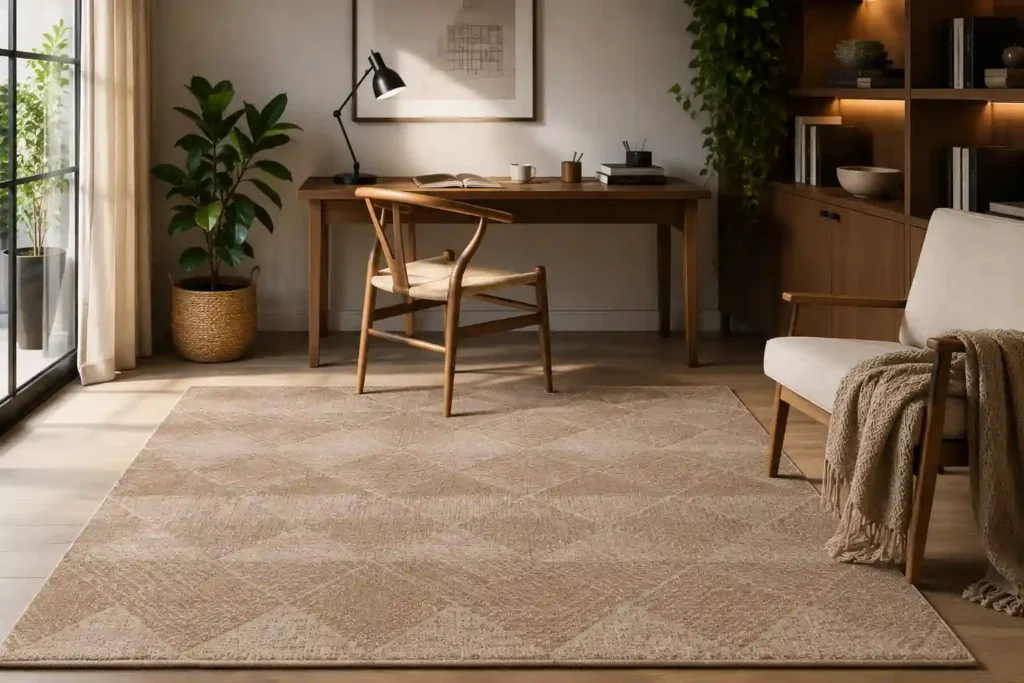
Eco Friendly Rugs for Study Areas: Buying Guide from a Handmade Rug Manufacturer
We have been weaving rugs in Bhadohi for years. In that time, we have made thousands of eco-friendly rugs for wholesalers, homes, offices and study rooms across the USA, UK and UAE. We have also watched buyers make the same mistakes over and over.
Choosing a rug that is too small or too large for the space, choosing the wrong rug material or go with “green” label without assessing your actual requirements can result to the wrong selection.
In this guide, we will walk you through what you need to know when choosing the right eco friendly rug. This is not a marketing talk, just what we have learned from making these rugs by hand.
What Actually Makes a Rug Eco Friendly
Here is where most buyers get misled. A rug can be sold as sustainable while its backing is glued with latex that off-gasses for months.
From our production floor, a genuine eco friendly rug means five things:
Natural fibres: Jute, wool, cotton, sisal or hemp. Never petroleum-based synthetics.
Non-toxic dyes: We use plant and mineral based colours. Madder root for reds, indigo for blues.
Handmade production: Our looms run on human hands, not industrial power or automated machinery.
No glue backing: Hand-knotted and handloom rugs need none. That is why they do not off-gas.
Biodegradable: A wool rug returns to the earth. A synthetic one sits in landfill for decades.
How to check for yourself ?
Flip any rug over and if you see a stiff cloth or rubbery layer glued across the back, there is latex in it. A true handloom or hand-knotted rug shows its weave on both sides.
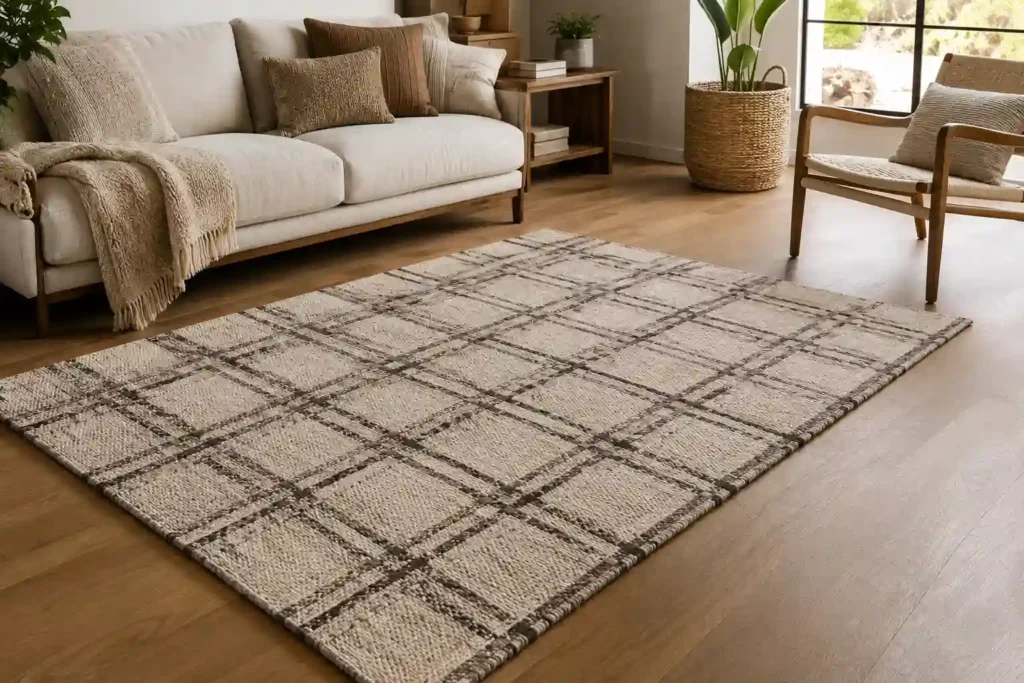
Why Eco Friendly Rugs are good for Study ?
An eco-friendly rug can make a study area more comfortable, inviting and more functional. Rugs made from natural or responsibly sourced materials can also support a more sustainable interior. Let’s understand.
The Air Quality Point Nobody Mentions
A study is usually the smallest room in the house with the door shut. Synthetic rugs release VOCs into that closed air but natural fibres do not.
It naturally absorbs airborne pollutants, which is one reason wool has been used in libraries and reading rooms for centuries. Cleaner air means fewer headaches through long sessions.
This is the part we see fail most. A desk chair rolling back and forth for years destroys a cheap rug. We have had customers send photos of machine-made rugs flattened bald in the chair zone within two years.
Hand-knotted and handloom rugs handle it because the pile is anchored knot by knot, not glued to a backing.
Hard floors bounce sound but wool and jute absorb it. Footsteps soften, the echo drops. In a study, that piece and silence matter as much as the comfort.
Jute grows in months with barely any water or pesticide. Wool renews with every shearing. Buying natural fibre supports the farming families we source from and keeps plastic out of your home.
Choosing the Right Rug Size: Tips for Every Room
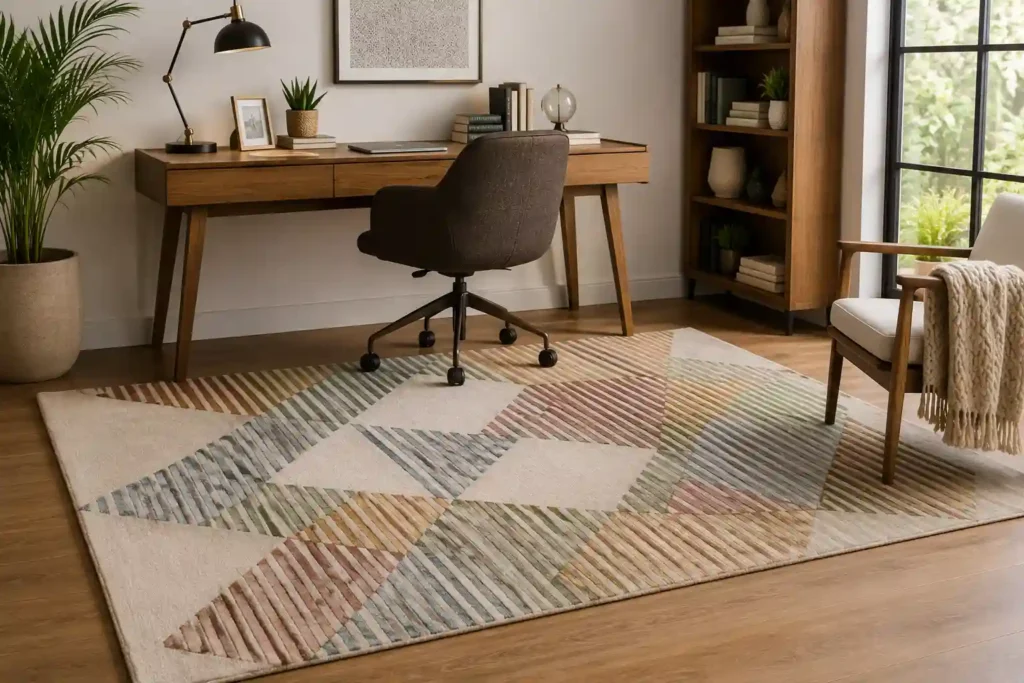
Measure with the chair, not just the desk. Roll your chair back as far as it goes. That entire path must stay on the rug. If the wheels drop off the edge, you will feel it every single day and the edge will wear out fast.
For most home studies, 5×8 or 6×9 works. Narrow rooms take a runner.
Fibre | Best For | Feel |
Jute | Budget-friendly, natural look | Costs more, sheds lightly at first |
Wool | Long sessions, cold rooms | Coarse underfoot, hates moisture |
Sisal | High-traffic study spaces | Firm, not soft |
Cotton | Small spaces, easy washing | Wears faster than wool |
Our Honest Recommendation
If you sit for hours, buy wool. It is the only fibre that stays comfortable that long. If budget rules and the room stays dry, jute is genuinely good value.
Where We Would Tell You Not to Buy
If your study is a damp basement, skip jute and sisal entirely. Natural fibres and moisture do not mix. Wool or cotton or nothing at all.
Best Rug Colours
Keep it quiet. Beige, grey, oatmeal, soft earth tones. Loud patterns compete with your work and pull your eye off the page. If you want visual interest, choose texture instead of a bold pattern.
Pile Height Fits Well
Keep Low pile for a study because the chair rolls cleanly and it holds less dust. Save the plush ones for the bedroom.
Rug Care Tips: What Actually Keeps a Rug Alive
We repair rugs people have owned for decades. The ones that last share the same habits:
Vacuum weekly, suction only: Turn the beater bar off. Rotating brushes tear natural fibres apart. This is the most common way people can ruin a good quality rug too.
Rotate every 3 to 6 months: Sunlight and wear should spread evenly.
Blot spills immediately. Dry cloth, press it towards down and do not rub because rubbing pushes the stain into the foundation.
Use a rug pad: Stops slipping, adds cushion and protects your floor.
Keep jute and sisal dry: Never use wet cleaning on your rug.
Professional deep clean every 1 to 3 years: Choose only professional cleaners who handle handmade rugs.
Why Buy from Hasida
We are a manufacturer over the decades. Our rugs are woven in Bhadohi, India’s carpet capital, by artisan families who have practised this craft for generations. When you order from us, it comes off our loom.
Direct from the loom: No middlemen, no markup layers included
Natural fibres and plant-based dyes: Wool, jute, cotton, silk
Made to order: Any size, shape, colour or design
Fair, ethical production: Safe conditions and fair wages for every artisan
Worldwide delivery: USA, UK, UAE and beyond
Ready to Build Your Study Space?
A study room deserves more than a cheap synthetic mat. Choose a handmade eco friendly rug that cleans your air, quiets your space and lasts for years.
Explore our eco friendly rugs collection at Hasida Rugs Collection or send us your room measurements and we will make one to fit. Enquiry Now
Frequently Asked Questions
Q1: What are eco friendly rugs made of?
A. Eco friendly rugs use natural fibres like jute, wool, cotton, sisal or hemp, coloured with plant-based dyes and no chemical backing.
Q2: Are eco friendly rugs good for study rooms?
A. Yes. Natural fibre rugs release no VOCs, absorb sound and add warmth, helping you stay comfortable and focused for longer.
Q3: Which eco friendly rug material is best for a study?
A. Wool suits long sessions with its softness and warmth. Jute offers a natural look at a lower cost. Sisal handles heavy traffic.
Q4: Do eco friendly rugs last as long as synthetic ones?
A. They last far longer. Handmade wool rugs can serve decades, while machine-made synthetic rugs usually fade within five to ten years.
Q5: How do I clean an eco friendly area rug?
A. Vacuum weekly with suction only, blot spills immediately and rotate every few months. Deep clean professionally once every one to three years.
Q6. Which rug is best for home offices?
A. Wool, jute and low-pile rugs are ideal for home offices because they offer durability, comfort, easy maintenance and smooth chair movement.