
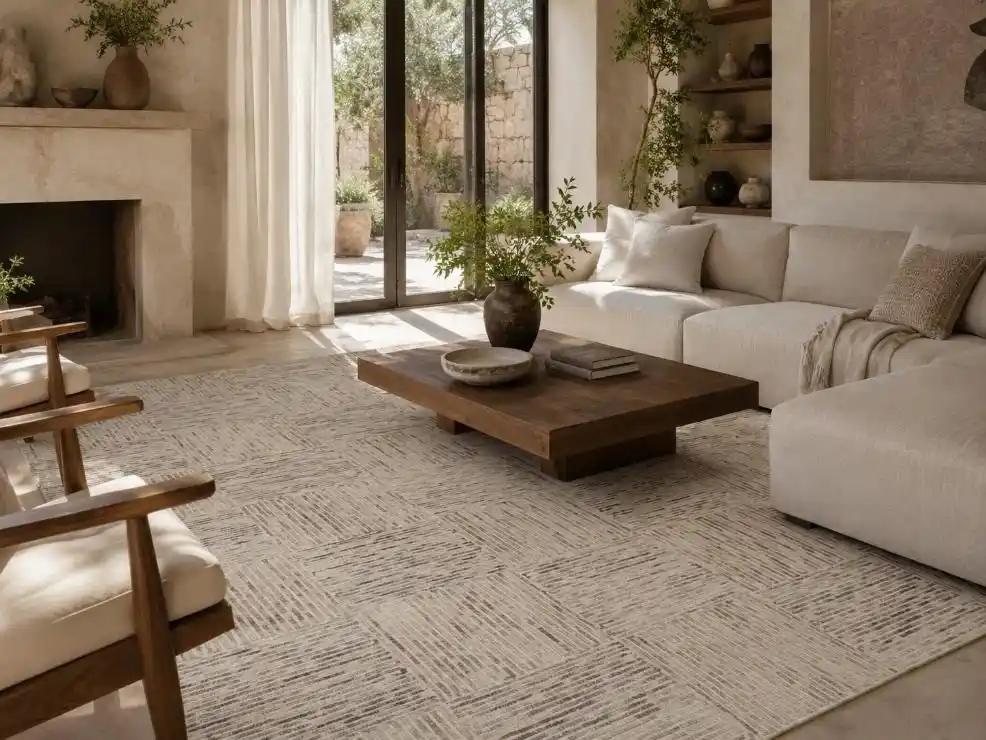
Sustainable Handmade Area Rugs for Luxury Homes and Designers
There is a shift happening in how the most thoughtful designers and homeowners are approaching interiors. The question is no longer just what looks beautiful. It is also what is made responsibly, what will last and what leaves the smallest mark on the world in the process of making it.
Eco-friendly fibres, traditional craftsmanship and strong construction make handmade rugs look better, feel more comfortable and last much longer.
This guide covers what makes a handmade area rug truly sustainable and why eco-friendly luxury rugs are becoming the default choice for designers.
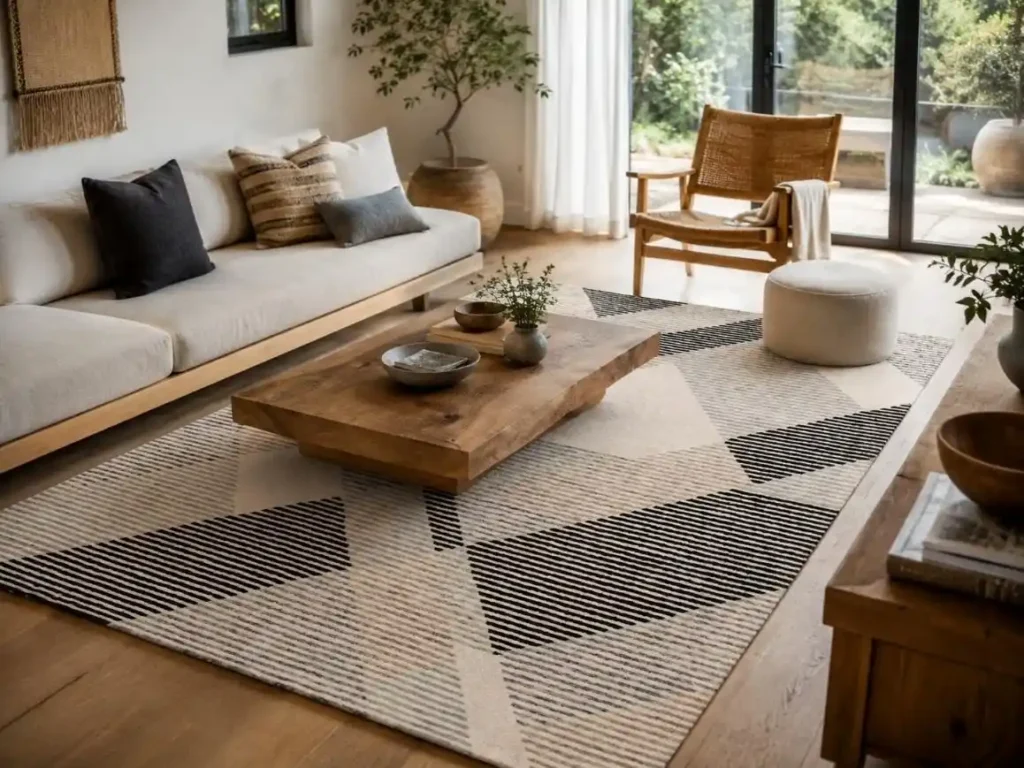
What Makes a Handmade Area Rug Genuinely Sustainable
The word sustainable gets used loosely in interiors so here is exactly what it means for handmade rugs.
A genuinely eco-friendly handmade area rug meets all of these standards:
- Made from renewable natural fibres, no petrochemicals involved
- Natural vegetable dyes or low-impact dyes that do not harm waterways
- Low energy production process compared to industrial manufacturing
- Built to last decades not years so it never ends up in landfill early
- Made by artisans who were paid fairly and worked in a safe environment
India’s Craft Edge
Wool rugs, hand-knotted silk pieces, soft texture of hand tufted rugs and handloom rugs valued for their lightweight feel, jute and hemp flatweaves and organic cotton dhurries all qualify when sourced correctly. India’s established weaving centres in Jaipur, Bhadohi, Agra and Mirzapur have been producing rugs that meet these criteria for centuries and continue to do so at a scale and quality level that no other region in the world can match.
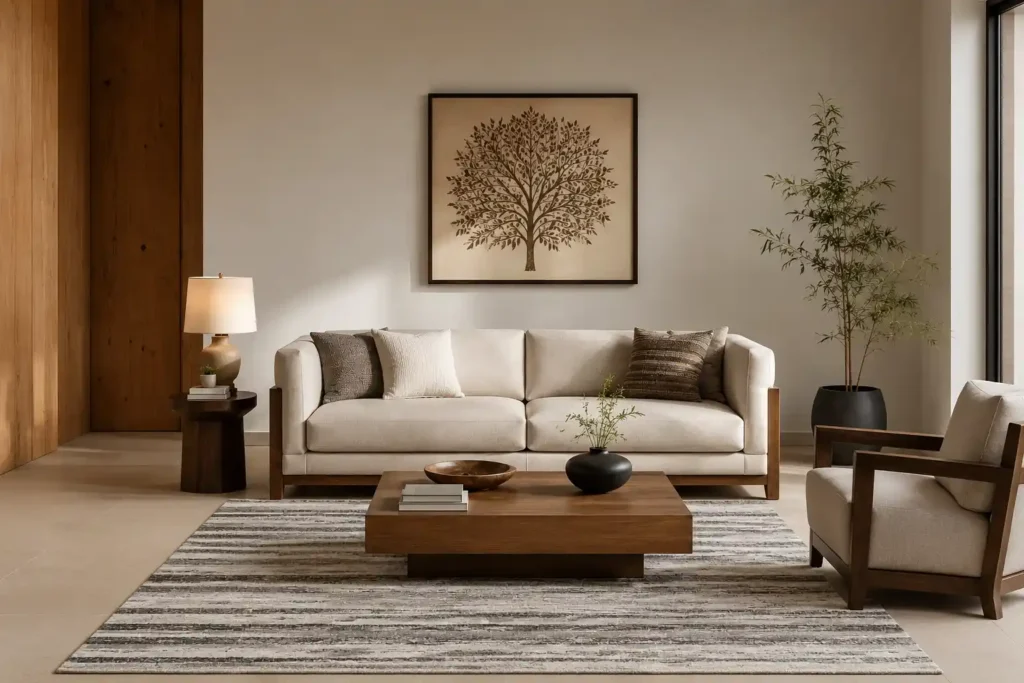
Why Eco-Friendly Luxury Rugs Are the Smarter Long-Term Choice
The sustainability case for handmade area rugs is compelling on environmental grounds alone. But there is also a purely practical argument that matters equally to designers and homeowners making significant investments.
- Natural wool rugs last 20–50 years
- Synthetic rugs wear out within 5–7 years
- Frequent replacements increase environmental waste
- Manufacturing and transport raise carbon impact
- One handmade rug lasts for decades
This is the case that the most forward-thinking designers are making to their clients right now and it is a case that holds up to scrutiny from every angle financial, environmental and aesthetic.
Not all fibres are equal in performance and understanding the differences helps both interior designers and homeowners make choices that are renewable and practically suited to the spaces they are specifying for.
Wool is the gold standard for sustainable handmade area rugs and has been for centuries. It is renewable, naturally resilient under heavy foot traffic and naturally helps regulate temperature and humidity in a room. New Zealand wool and Indian wool blends are the most commonly used in premium handmade rugs and both deliver exceptional performance.
Silk is one of the most luxurious fibres. It is protein-based, biodegradable and produced by silkworms rather than through petrochemical processes. Silk handmade rugs have an unmatched luminosity and fineness of detail that makes them the premium choice for formal spaces, low-traffic areas and applications where visual refinement is the primary requirement.
Jute and Hemp
Jute and hemp are among the most sustainably produced natural fibres available anywhere in the world today. Both are fast growing crops that require minimal water and no pesticides to thrive and both produce fibres that weave beautifully into flatweave rugs with a strong and genuinely satisfying texture.
Jute and hemp rugs work particularly well in casual luxury interiors, outdoor adjacent spaces and rooms where the design direction calls for organic texture rather than a refined pile finish.
Organic Cotton
Organic cotton certified under GOTS (Global Organic Textile Standard) or similar recognised standards is a thoughtful and genuinely sustainable fibre choice for lighter weight flatweave rugs and dhurries. It is soft underfoot and more washable in a way that most natural fibre rugs are not and available in a wide range of both natural and beautifully dyed colours that hold their vibrancy far better than conventionally processed alternatives.
Organic cotton sustainable handmade rugs are particularly well suited to children’s rooms, dining rooms and any space where easy maintenance is just as important as visual appeal.
Natural Dyes and What They Mean for Sustainability and Beauty
Most conversations about sustainable rugs focus on the fibre itself but what the fibre is dyed with and how that dyeing process is carried out matter just as much to the overall environmental story of the finished piece.
- Synthetic dyes can harm waterways
- Natural dyes come from plants
- Eco-friendly dyes create richer and deeper colours
- Colours soften beautifully with age and light
- Natural ageing adds character, not fading
- Indigo, madder and walnut dyes gain richness over time
For designers specifying eco-friendly luxury rugs for high-end residential projects the natural dye story is both an environmental differentiator and an aesthetic one that resonates with clients who understand quality materials.
What to Check Before Buying Sustainable Handmade Rugs
The market for sustainable rugs includes everything from genuinely responsible production to greenwashing and knowing the difference before spending significant money is essential.
Here is what to look for and ask about when sourcing handmade area rugs:
Check Fibre Certification
Before buying, ask for documentation confirming the fibre content and its origin. GOTS certification for organic cotton and wool confirms that organic standards have been met throughout the supply chain. GoodWeave certification confirms that no child labour was used in production.
Ask About Dye Information
Ask specifically whether natural or synthetic dyes were used and request information about the dye process. A transparent manufacturer will have this information readily available. One who cannot or will not provide it is a manufacturer whose sustainability claims should be treated with caution.
Responsible Manufacturing and Artisan Welfare
Ask about the production conditions and fairtrade practices of the manufacturer. Sustainable production is not only about environmental impact. It is also about the people producing the rugs. A genuinely sustainable supply chain pays artisans fairly, provides safe working conditions and supports the continuation of traditional craft skills across generations.
Check Construction Quality of Rugs
A genuinely sustainable handmade area rug from India is built to last. Ask about knot count for hand-knotted pieces, hand-tufted backing material, pile height consistency and the quality of the foundation materials. Cheap construction undermines sustainability claims regardless of what the fibre or dye certification says.
Sustainable Handmade Area Rugs in Luxury Interior Design
The most interesting development in how eco-friendly luxury rugs are being used in high-end interiors right now is the shift from treating sustainability as a compromise to treating it as a design asset.
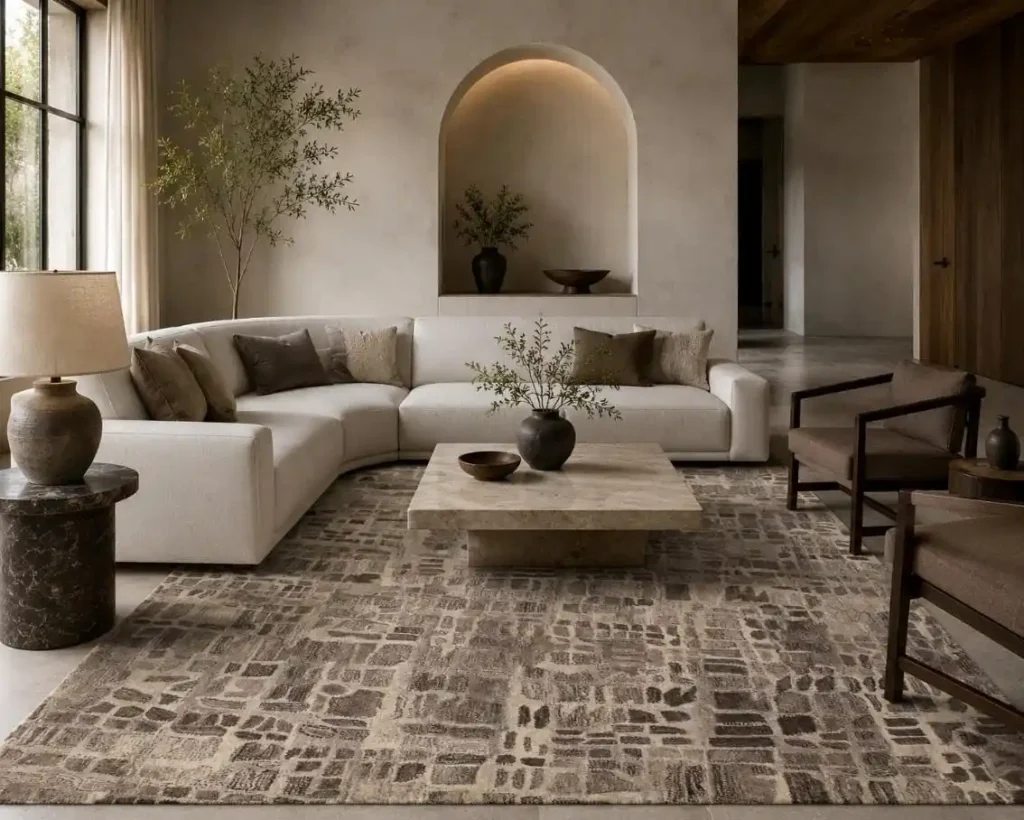
The Beauty of Natural Wool and Plant-Based Dyes
A natural undyed wool rug in a warm oatmeal tone does not just reduce environmental impact. It brings a softness and organic warmth to a room that no synthetic alternative can replicate.
A hand-knotted piece dyed with natural indigo does not just avoid chemical dyes. It brings a colour depth and aging quality that becomes one of the most beautiful things in the room over time. Handtufted rugs made with wool offer plush texture, rich colours and versatile designs, while handloom rugs bring a lightweight, artisanal feel with subtle warmth and texture.
Why Designers Prefer Sustainable Handmade Rugs for Luxury Interiors
People working at the highest level of residential and hospitality interiors are increasingly specifying sustainable handmade area rugs as the centrepiece around which the rest of the room is built rather than as a responsible addition to an otherwise conventional specification. The rug sets the material story and everything else follows from it.
Find the Perfect Eco-Friendly Rug for Your Next Interior Project
Looking for sustainable handmade rugs for residential, hospitality or interior design projects? Connect with Hasida Rugs Collection for custom rug development, sampling support and export-quality handmade rugs crafted in India.
Explore the full collection of sustainable handmade area rugs and eco-friendly luxury rugs at Hasida Rugs Collection and find the piece that brings both beauty and responsibility to your next project.
Frequently Asked Questions
Q1. What makes a handmade rug sustainable?
A: Sustainable handmade rugs use renewable fibres, eco-friendly dyes and artisan craftsmanship while offering long-lasting durability with lower environmental impact.
Q2. Are wool rugs better than synthetic rugs?
A: Yes, wool rugs are more durable, biodegradable and long-lasting, while synthetic rugs wear out faster and create more environmental waste.
Q3. Which natural fibres are best for eco-friendly rugs?
A: Wool, jute, hemp, silk and organic cotton are popular sustainable fibres known for durability, comfort and beauty.
Q4. How can I identify a genuinely sustainable rug?
A: Check for fibres, ethical production practices, certification labels and transparent information about dyes, materials and artisan working conditions.
Q5. Are sustainable handmade rugs suitable for luxury interiors?
A: Yes, sustainable handmade rugs add warmth, texture and timeless elegance, making them ideal for modern luxury homes and designer spaces.