
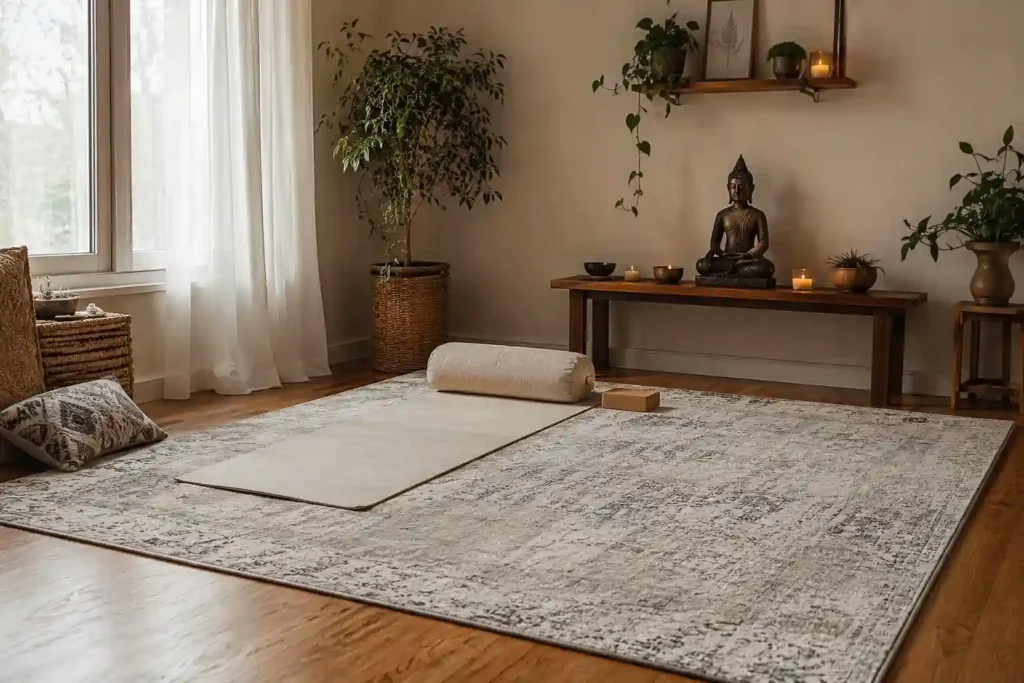
Chenille Rugs for Yoga and Meditation Spaces: How to Create a Calm and Mindful Corner
Whether setting up a home, yoga studio or simply creating one corner of a room for meditation or mindful living, the rug you put down matters more than most people expect.
Chenille rugs have quietly become the go-to for yoga space decor and become a popular choice for many homes, yoga and meditation spaces. They feel soft underfoot, require minimal maintenance and complement the rest of your decor perfectly.
Here are a few things to consider before choosing one.
Why Chenille Rugs Work So Well for Yoga and Meditation
A yoga corner at home should feel a little different from everywhere else in the house, warmer and quieter, creating a space that feels calm and purposeful.
A lot of that comes down to texture and that’s why chenille rugs keep coming up in this conversation.
1. Soft and Comfortable Underfoot
Chenille yarn is woven tight and dense, so the pile has this velvety give to it that a flat-woven or jute rug just doesn’t have. Sit in a cross-legged pose for five to ten minutes and you’ll notice the difference. Your ankles and knees won’t be pressing into something thin and scratchy. That’s basically the whole case for a soft chenille rug in a floor-based practice space instead of the hallway runner you already own.
2. Easy to Move Around
Most of us don’t have a spare room empty for yoga. A rug for yoga corner setups needs to roll up and get out of the way when the kids need the living room back or when guests are coming over. A chenille rug is noticeably lighter than a wool rug or a thick shag rug of the same size, so it’s not a two-person job to move it.
Chenille rugs are generally looks beautiful in every color but for yoga and meditation space they tend to come in quieter colors such as oatmeal, taupe, sage green and soft shades of grey. Bold patterns can be great in a living room but they’re distracting when you’re trying to settle your mind.
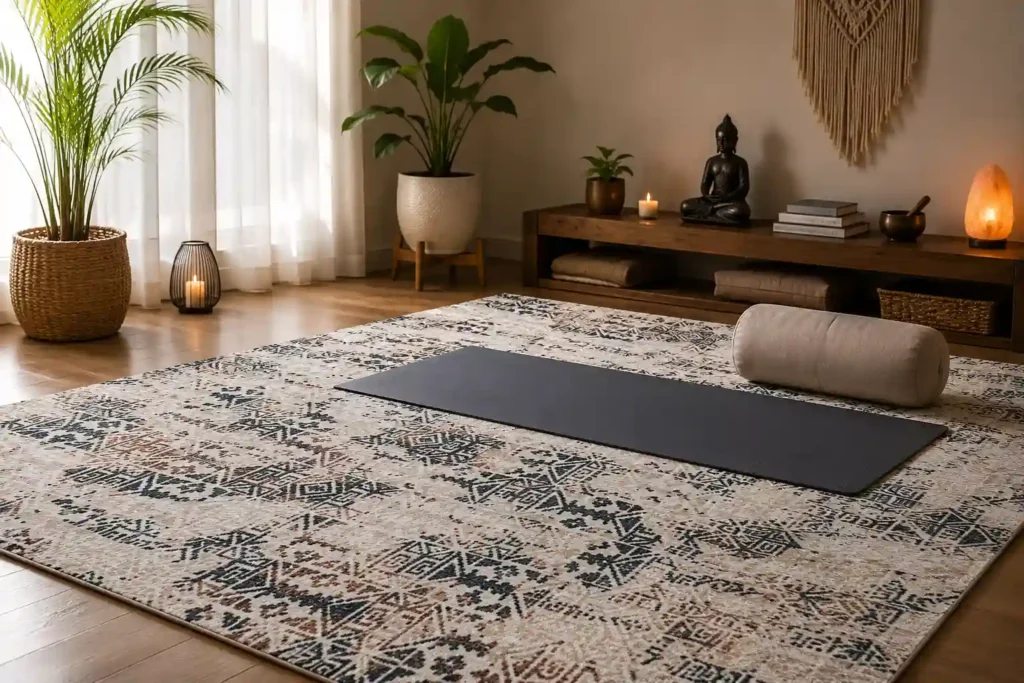
You don’t need a whole room to create a peaceful yoga space. You need a corner and a little intention that keep your mind calm. Some things that actually help:
- Pick somewhere low-traffic: By a window is nice for the light but any quiet spot works.
- Put a rug down first: It’s the one object that tells your brain “This bit of floor is different now.”
- Don’t over-decorate it: A plant and a candle that’s usually good. Too many objects and it starts to feel cluttered instead of calm.
- Keep colours limited: Two or three tones are good enough. It’s a small trick but it’s what makes meditation space decor read as deliberate rather than thrown together.
People often ask if they still need a yoga mat once they’ve got a rug down. Yes, a rug gives you comfort, not grip. So you still need the mat for that.
Size is where most people get this wrong. They either buy something too small that barely covers the mat or go so large the rug takes over the entire room.
Here is a simple way to think about it before buying it for yoga or meditation space:
- For individual practice, a 4×6 ft rug comfortably fits your yoga mat
- Choose a 5×7 or 6×8 ft rug for yoga flows with wider movements
- A 3×5 ft rug is ideal for a cosy meditation corner
- Round rugs create a balanced and calming meditation space
One rule that applies regardless of size: measure the full area you actually use during practice, not just where the mat sits. Your rug should cover that entire footprint with a little extra on each side.
Meditation Room Setup: Layering for Comfort
If you’re mostly sitting still rather than moving through poses, layering helps. A folded blanket or a thin cushion on top of the rug adds height, which your hips will thank you for during longer sits. Some people like a small indoor yoga rug on top of a bigger area rug too. The smaller one marks exactly where the mat goes and the larger rug fills in the rest of the room so it doesn’t look like an afterthought.
If you practice barefoot, get a non-slip yoga rug backing or use a rug pad. It sounds like a small thing until your rug slides mid-pose and you realize how much it actually matters.
Caring for a Washable Chenille Rug
This is probably the biggest reason chenille rugs have stuck around in wellness spaces instead of fading out as a trend it’s genuinely low maintenance:
- Vacuum weekly: Ideally on a low setting without the beater bar, so you’re lifting dust instead of tearing at the pile.
- Deal with spills right away: Use mild soap, cool water, blot rather than scrub because chenille soaks up liquid fast.
- Read the care label before you throw it in the wash: Smaller pieces are often a genuine washable chenille rug option but bigger area rugs usually need a professional clean or a careful hand wash.
- Rotate it every couple of months: Rotating your rug every couple of months helps prevent uneven wear and prolonged sun exposure in one area.
- Let it dry all the way through: Let the rug dry completely before placing it back on the floor, as trapped moisture can cause mould, odours and damage.
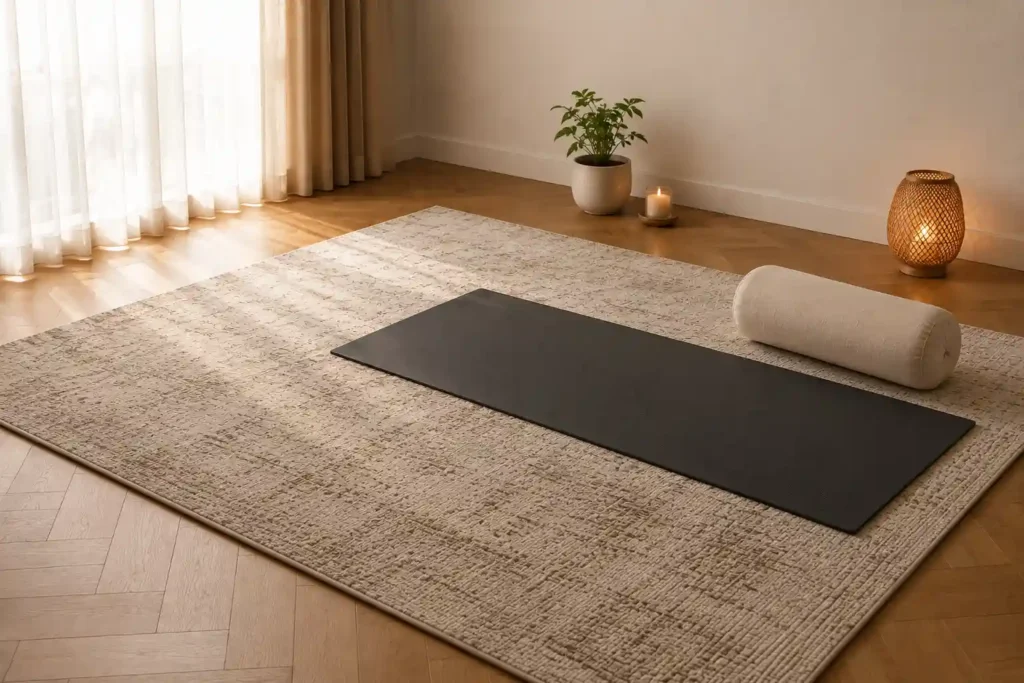
Do Chenille Rugs Shed?
Yes, sometime at the beginning and only a little. When a new chenille rug arrives, the pile is freshly cut and there will be some loose fibres that come away in the first few weeks of use and vacuuming. This is completely normal and not a sign of poor quality. It settles down on its own.
A few things that help:
- Vacuum gently on a low suction setting for the first month no beater bar or heavy brush roll
- Do not panic if you see fibres on your mat or socks early on, it stops
- After the initial settling period, a well-made chenille rug sheds very little under normal use
A quality handmade chenille rug from a manufacturer like Hasida Rugs Collection uses tightly woven yarn that locks the pile in place far better than alternatives.
Chenille Rugs vs Other Options for a Wellness Corner
It’s worth comparing it honestly against the alternatives. Wool holds up longer but it’s heavier and costs more. Cotton flat-weaves wash easily but don’t give you much cushion. Shag looks plush but collects dust and is a pain to keep flat under a mat.
Chenille lands somewhere in the middle of all that, soft enough to sit on comfortably, light enough to actually move, simple enough to keep clean. That middle ground is exactly why it shows up so often in home wellness decor recommendations and meditation space.
Final Thoughts
Creating a peaceful yoga or meditation corner does not require a complete room makeover. Sometimes, a thoughtfully chosen rug is enough to make the space feel warmer, quieter and more inviting. Chenille rugs offer a soft surface underfoot, gentle warmth and a calming aesthetic that naturally complements a dedicated yoga or meditation area. Their subtle texture and understated colours help create an environment that encourages relaxation without overwhelming the space.
Thinking about rugs for other areas of your home, Hasida Rugs Collection covers plenty of other textures and rug types like, handloom and hand tufted rugs and styles, in case you want ideas beyond this one corner.
Frequently Asked Questions
Q1. What is a chenille carpet?
A. Chenille carpet meaning refers to a soft, plush floor covering made from chenille fabric, known for its velvety texture, comfort and decorative appeal.
Q2. Why are Chenille Rugs popular in India?
A. Chenille Rugs are popular in India for their premium craftsmanship, soft texture, stylish designs and durability, making them suitable for homes, hotels and commercial spaces.
Q3. Do chenille rugs need a rug pad?
A. Using a rug pad is helpful, especially on slippery floors. It helps prevent slipping, adds extra cushioning, protects your flooring and extends the life of your chenille rug.
Q4. What is chenille fabric made of ?
A. Chenille fabric is made from cotton, polyester, acrylic or blended fibers, creating a soft, fuzzy texture that is comfortable, durable and visually appealing.
Q5. How do I maintain a chenille rug?
A: Vacuum your chenille rug regularly or weekly, clean spills immediately and avoid excessive moisture to preserve its softness, texture and appearance for years.
Q6. Are chenille rugs suitable for meditation spaces?
A. Yes, chenille rugs are ideal for meditation spaces. Their soft texture, warm feel and calming appearance help create a comfortable and peaceful environment for daily practice.