
Stair Carpet Runners: Adding Safety and Style to Your Stairs
Your stairs get walked on every day, yet most homeowners treat them as an afterthought. Bare wood is slippery, loud and easy to scuff. The right stair carpet runner changes all three problems at once and it can turn a plain staircase into one of the most striking features in your home.
In our 18 years of weaving and supplying hand tufted or traditionally crafted handmade rugs to homes across the UK and USA, we’ve seen how much a well-chosen runner changes a staircase. This guide covers what to look for in a stair carpet runner, from sizing to materials to installation.
Why a Stair Carpet Runner Is Important
A stair carpet runner is more than a decorating item or piece in your home. It earns its place on your staircase in four ways:
- Grip: A textured surface gives your feet more traction than polished wood or laminate.
- Noise reduction: Wool and other dense fibres absorb footsteps, which helps in multi-storey homes.
- Floor protection: Runners shield the treads from scratches, dents and everyday wear.
- Style: Color and pattern give the staircase a focal point, even in a neutral hallway.
Safety only holds if the runner is installed properly. A loose or poorly fitted stair carpet can create a hazard instead of preventing one, so we cover installation below.
Choosing the Right Material for Stair Runners
Stairs are among the highest-traffic spots in a home, so material matters more here than in a living room.
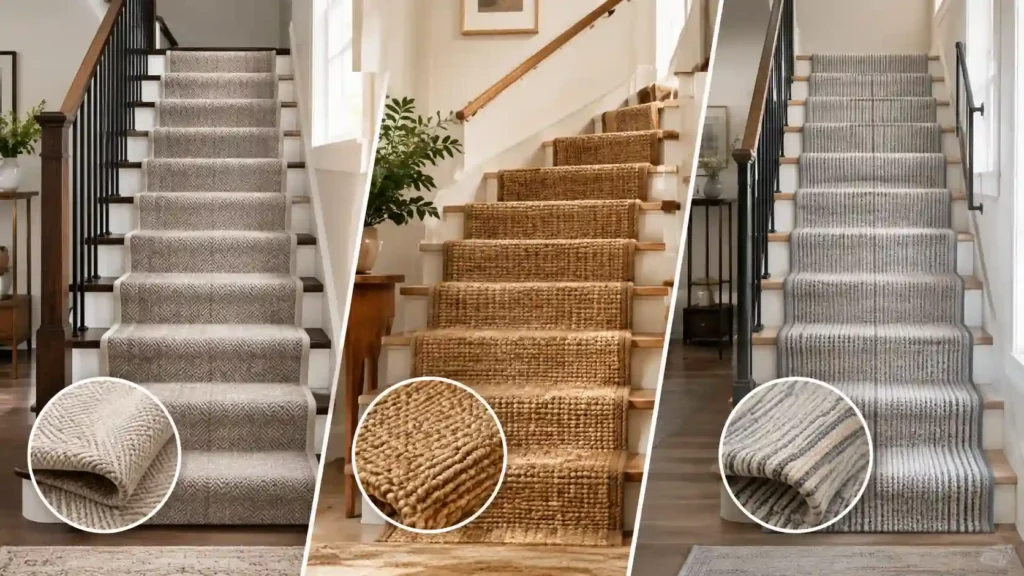
1. Wool
Wool is our top recommendation for every home because its natural scales let dye penetrate deeply. It may helps resists crushing, which matters on stair edges that take the most wear.
Suits relaxed, textured interiors and offers a natural, earthy look. It works well in lower-traffic staircases, though it is rougher underfoot than wool.
Handloom cotton blends are lighter and more flexible than other materials, which makes them easy to install on staircases with tight turns.
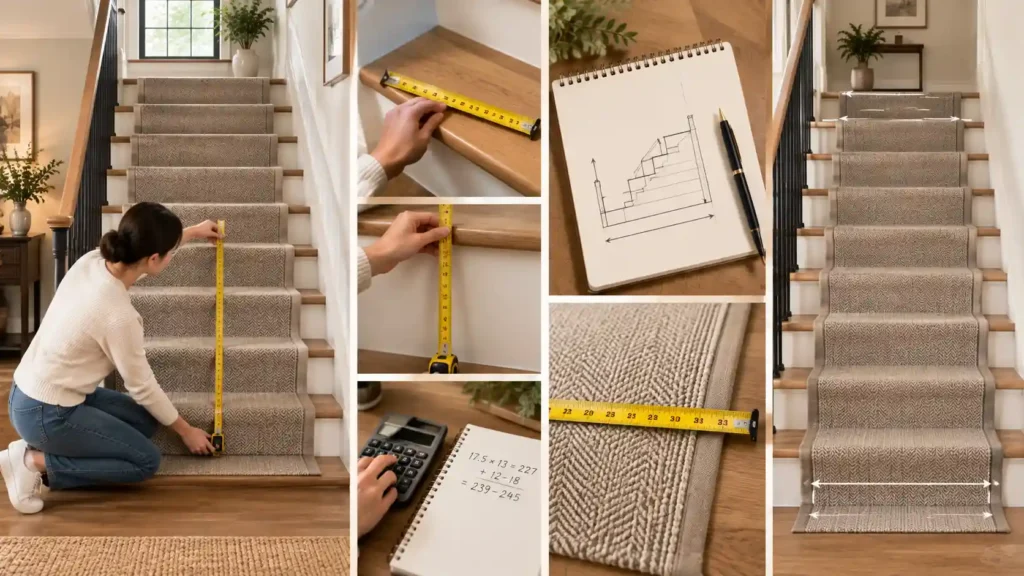
Accurate measuring is the most important step and most people rush. Here is the full process:
- Firstly, measure the tread depth
- Measure the riser height (the vertical part between steps)
- Add the two numbers together
- Multiply by the number of steps
- Add 12 to 18 inches extra, so you can shift the runner later and spread out the wear
For example: A 10-inch tread and a 7.5-inch riser give you 17.5 inches per step. Across 13 steps, that is roughly 227 inches or just over 19 feet. Standard US building code sets a minimum tread depth of 10 inches, so many American staircases fall close to this range.
For width, most stair runners measure between 27 and 31 inches. Leave a few inches of bare stair on each side so the edges stay visible and the runner looks intentional.
|
Staircase Width |
Recommended Runner Width |
Exposed Floor Each Side |
|
36 inches |
27 inches |
About 4.5 inches |
|
40 inches |
31 inches |
About 4.5 inches |
|
42 inches |
31 to 33 inches |
About 5 inches |
|
48 inches or wider |
33 to 36 inches |
About 6 inches |
Use this table as a starting point then check your own staircase before placing the order. Older houses often have narrower or uneven stairs.
Match Your Runner to Your Home’s Style
A runner doesn’t have to be loud or dramatic to make an impact. It just needs to fit the style of your home.
If your space leans modern or minimal, stick to clean lines and neutral shades. A soft grey or beige wool modern rug can make your stairs look neat and calming.
If your home has a more urban or updated look, you might prefer something bold. A contemporary rug with geometric patterns or stripes can add energy and personality. These styles work well in homes that follow the latest interior design trends.
Style Ideas for Carpet Stair Runners
- Solid neutrals: Keep the focus on the staircase itself and suit modern interiors.
- Bold stripes: Add rhythm and make a long staircase feel more dramatic.
- Traditional patterns: Pair well with classic or period homes.
- Earthy jute: Earthy jute and natural tones suit farmhouse and coastal styles.
If you’re stuck, match one color in the runner to something already in the hallway, such as a wall tone, a frame or the front door.
Why Handmade Stair Carpet Lasts Longer
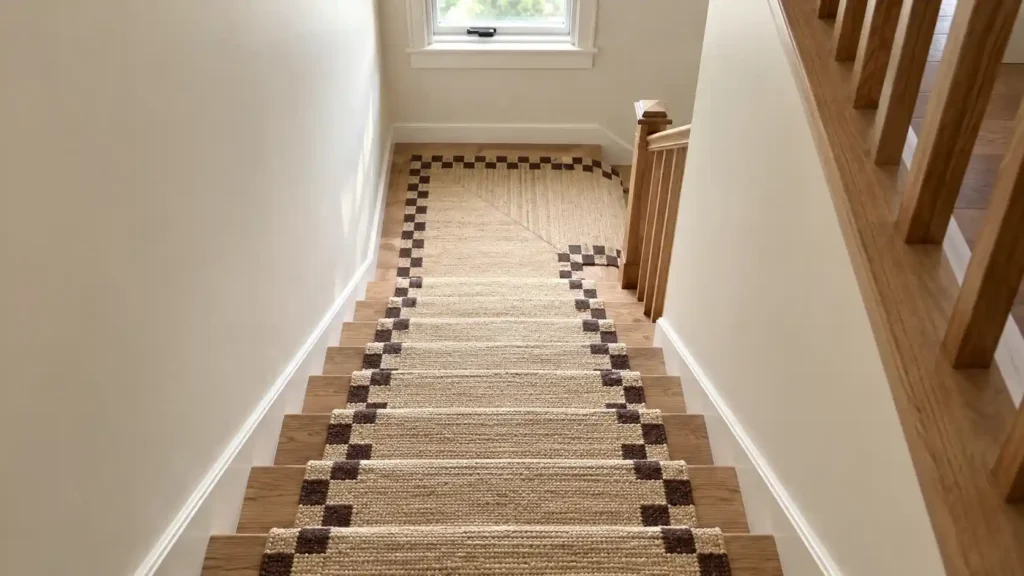
Stair edges take far more abuse than a flat floor. Each step compresses the same spots thousands of times a year. Handmade runners, particularly hand-knotted wool, are built to handle that pressure.
At our Collection, craftsmen in Bhadohi, India’s rug-weaving capital, have woven rugs for generations. Every piece carries the small natural variations of the weaving process, so no two runners are quite identical.
We also make custom rugs and runners to your exact staircase dimensions, which solves the problem of off-the-shelf sizes not fitting your stairs.
Care Tips to Keep Your Stair Carpet Runner Looking Good
- Vacuum weekly, using a hose attachment on the edges
- Move the runner up or down a few inches every 6 to 12 months to even out to wear
- Treat spills right away with a clean, damp cloth
- Avoid harsh chemical cleaners, which can strip natural fibres
Choose a Stair Carpet Runner Made for Your Home
A beautiful, secure stair carpet makes your staircase safer, quieter and more inviting every single day. Explore the Hasida Rugs Collection to find handmade stair carpet runners woven by skilled artisans in Bhadohi or contact us about a custom size for your staircase.
Your stairs carry your whole household. Give them a runner that’s built to last.
Frequently Asked Questions
Q1. How wide should a stair runner be?
A. Most stair runners are 27 to 31 inches wide, leaving a few inches of exposed stair on each side.
Q2. How do I measure for stair carpet runners?
A. Add tread depth and riser height, multiply by step count, then add 12 to 18 inches extra.
Q3. What is the best material for a stair carpet runner?
A. Wool is the best choice, since it resists crushing and holds its colour under heavy daily traffic.
Q4. Are stair runners safe?
A. Yes, when secured properly with a non-slip pad and stair rods or grippers, they improve traction.
Q5. Do I need a rug pad under a stair runner?
A. Yes. A stair-specific pad prevents slipping, adds cushioning and protects both the runner and the treads.