
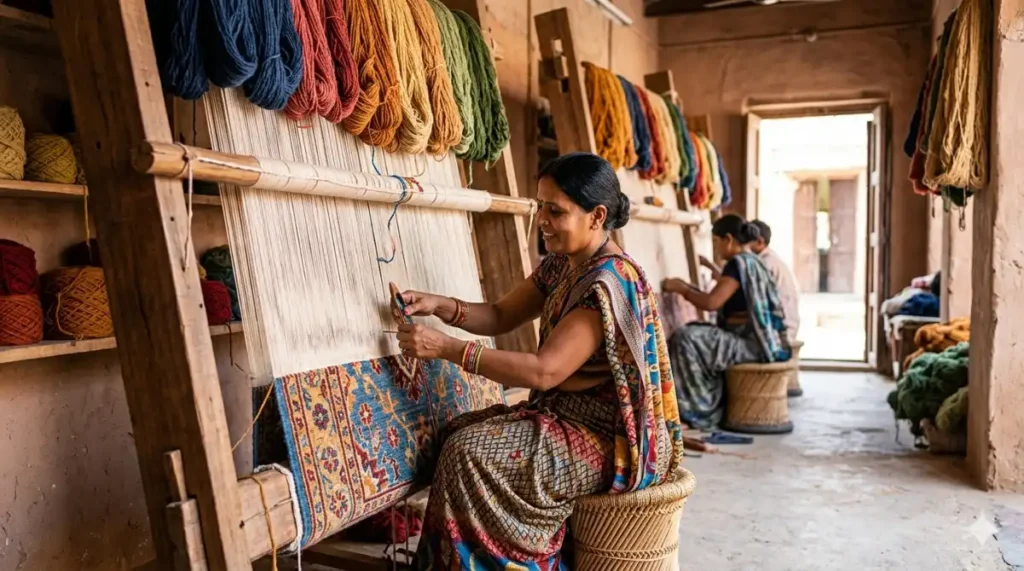
How to Source Handmade Rugs from India: A Complete Buyer’s Guide
India has been crafting world-class handmade rugs for centuries and today, it remains the single most reliable destination for wholesale buyers.
If you are a retailer, interior designer or importer, this guide walks you through everything you need to know to source handmade rugs wholesale from India the right way.
Why India Leads the Global Handmade Rug Market
India is one of the largest exporters of handmade rugs globally. What sets India apart is not just scale, but consistency and flexibility for B2B buyers.
- India supplies 40%+ of global handmade rugs
- Generational craftsmanship ensures quality
- Strong customization for private labels
- Premium quality and competitive prices
For global buyers who are looking to import rugs from India, the combination of craft, scale and cost cannot be matched anywhere else.
Types of Rugs You Can Source
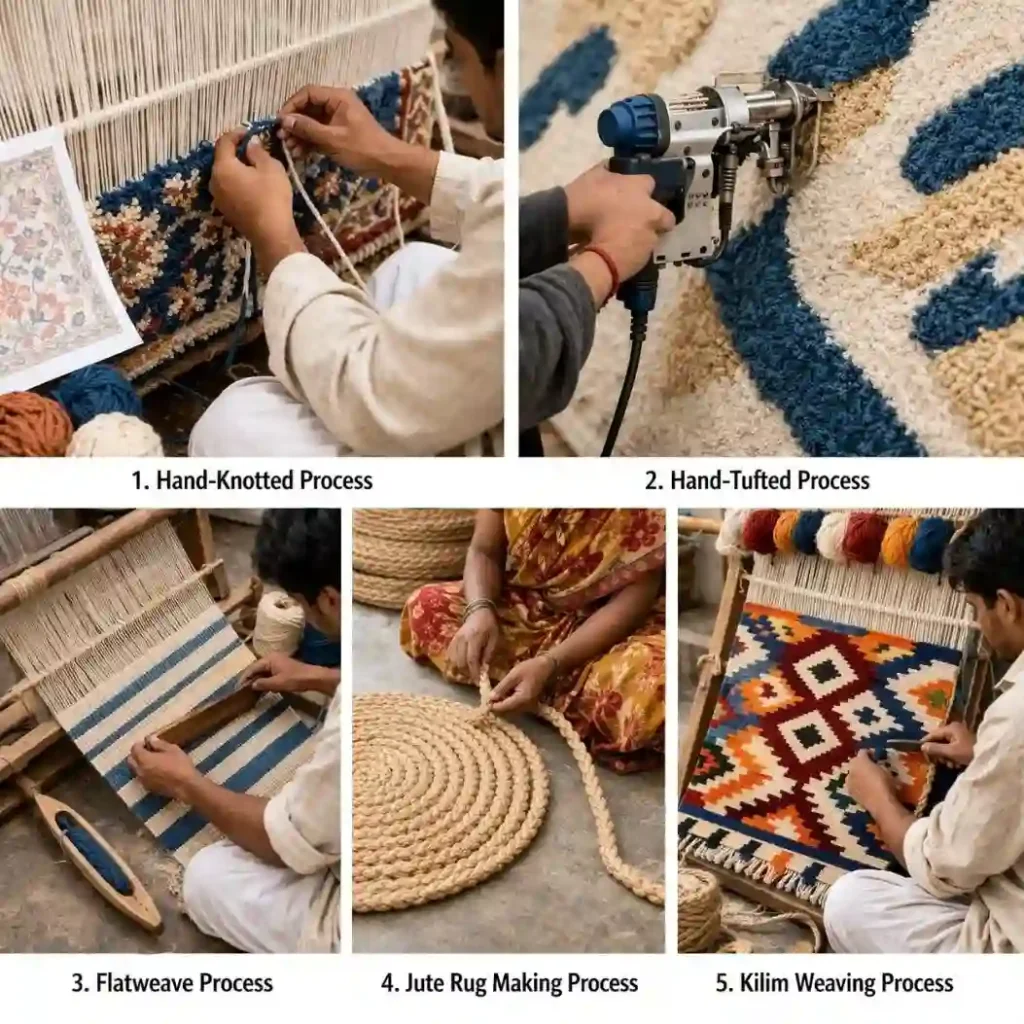
India produces an exceptionally wide range of rug styles, constructions and materials. Understanding what is available helps you match the right product to your market.
- Hand-knotted rugs are premium and durable
- Hand-tufted rugs are produced fast and are inexpensive
- Flatweave rugs are lightweight and reversible
- Jute rugs are eco-friendly and popular
- Kilim rugs have a strong geometric appeal
Best Sourcing Regions to Know
Not all of India produces the same type of rug. Each major rug-producing region has its own specialty, style and more importantly, craft tradition. For example:
- Jaipur is known for its superior handcrafted rugs
- Agra specializes in traditional hand-knotted and grass rugs
- Bhadohi is the rug capital with large-scale production
- Varanasi is known for fine silk and intricate rugs
- Panipat focuses on hand loom and hand tufted rugs
Knowing the right region for your product type saves time and connects you directly with the most experienced manufacturers.
How to Find a Reliable Wholesale Supplier
Finding the right rug wholesale supplier in India is the most critical step in the entire sourcing process. Do not rush it.
- Attend CEPC (Carpet Export Promotion Council) trade fairs for direct supplier access
- Use B2B platforms to find suppliers
- Ask for buyer references before committing
- Request a factory or virtual tour
- Verify export history and certifications
A reliable supplier communicates clearly, delivers samples on time and answers all your questions.
Understanding Materials and Construction
Material quality directly affects durability, texture, appearance and price. Before placing a wholesale order, get complete clarity on exactly what goes into each rug.
- Wool is durable and soft
- Cotton is used in flatweaves and as a backing
- Jute and sisal are natural and affordable
- Silk is luxurious but delicate and premium
- Blends balance quality and price
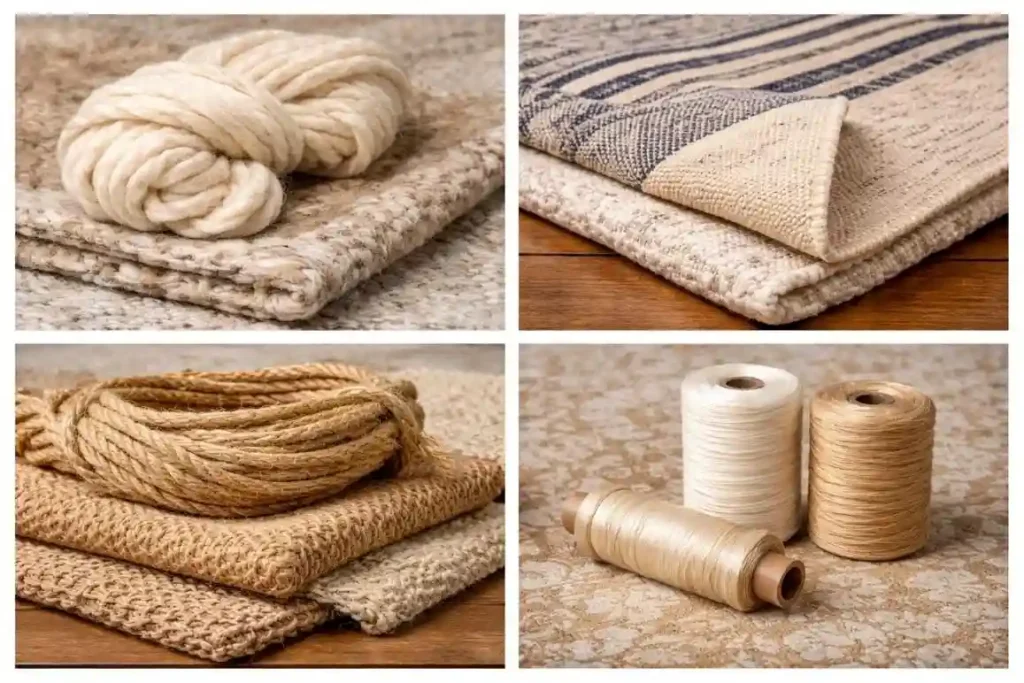
Always ask about pile height, backing material and finishing standards before approving any bulk order.
Customization and Private Labeling Option
One key benefit of sourcing from India is the high level of customization with most exporters offering flexible options without large minimum orders.
- Custom sizes, colors and designs are widely available
- Private labeling and packaging are commonly offered
- Pantone color matching is supported
- Exclusive designs are available for bulk orders

If you are building a private-label rug brand, India provides more flexibility and control than almost any other sourcing destination.
Quality Checks Before Placing a Bulk Order
India ensures a high level of customization, allowing most exporters to meet specific requirements without large minimum orders.
- Always request samples before placing bulk orders
- Check color, density, backing and finish
- Match production with the approved sample
- Use third-party inspection for big orders
- Ask about their quality control process
A final and careful quality inspection before shipment is far better than dealing with returns and complaints after delivery.
Factors That Affect Wholesale Rug Pricing
Knowing what affects rug pricing can help you negotiate better and set the right margin for the product.
- Hand-knotted rugs costs more than tufted or flatweave rugs
- Silk and fine wool are more expensive and premium
- Larger, complex designs cost more
- Bulk orders reduce per-unit cost
Shipping, Import duties and Export Documentation
Importing rugs from India involves several key steps that every buyer should understand upfront.
- Key documents include a commercial invoice and a bill of lading
- Import charges are not the same in every country
- Work with a customs clearance agent to avoid delays
Understanding the full landed cost gives a clear picture of actual margins.
Red Flags to Avoid When Choosing a Supplier
Not every supplier you find online is trustworthy. Stay alert for these warning signs throughout the sourcing process.
- No factory photos or necessary certifications
- Demands full payment upfront
- Prices seem too low
- Poor or slow communication
- No verified business details
If something feels off during the initial conversations, trust your instinct. A trustworthy wholesale rug supplier in India will welcome your due diligence, not resist it.
Choosing the Right Manufacturer
Choosing an experienced rug manufacturer partner in India ensures reliability, consistent quality and long-term collaboration.
Hasida Rugs Collection offers unmatched craft, variety and more importantly, value for global buyers. Explore our handmade rug collection and connect with us to start your journey. Start with a sample, customize your designs and build your rug collection with confidence.
Frequently Asked Questions (FAQs)
Q1. Why should I source handmade rugs from India?
High-quality craftsmanship, customization and competitive pricing, making it a top sourcing destination.
Q2. What types of rugs are available in India?
You can find hand-knotted, hand-tufted, flatweave, jute and kilim rugs in various styles. You can also customize rugs according to your own style and vision.
Q3. How do I verify a rug supplier in India?
Check references, request samples, review export history and ask for factory visits or virtual tours.
Q4. What affects the cost of handmade rugs?
Pricing depends on materials, size, design complexity, construction method and order quantity.
Q5. What documents are needed for importing rugs?
Common documents include a commercial invoice, packing list and bill of lading.