
How Are Handmade Rugs Made? Inside the Bhadohi Rug Making Process
Most people choose a rug for its colour or pattern. Very few take a minute to think about where it actually came from or how many hands shaped it before they reached their floor and make the floor more comfortable and luxurious.
Understanding how hand tufted rugs are made changes the way you see them entirely. What looks like a simple home accessory is in reality the result of weeks or months of skilled work rooted in one of India’s oldest and most respected and renowned craft traditions. At Hasida Rug Collection every rug that leaves our workshop carries that history with it and this guide walks you through exactly how it gets made from the very first step to the last.
Step 1: Choosing the Right Raw Materials
Every great rug begins long before any weaving takes place. We source carefully selected natural materials that directly influence the rug’s durability, texture and overall quality.
- 100% natural wool sourced from high-altitude sheep breeds
- Wool selected for strength, softness and natural durability
- Bamboo silk, cotton and pure silk used for selected designs
- Materials chosen based on rug style and intended use
The quality of the raw material sets the ceiling for everything that follows because a rug is only ever as good as the wool it is built from.
Step 2: Carding and Hand Spinning the Wool
Once the raw wool arrives, it is cleaned and carded which means the fibres are combed through to align them and remove any debris. After carding the wool is hand spun into yarn.
- Hand spinning adds unique texture and character
- Natural variations create depth and visual warmth
- Irregularities highlight authentic handmade craftsmanship
- Gives rugs a softer and more organic appearance
No machine can replicate that quality and no machine made rug has ever quite managed to feel the same underfoot.
Step 3: Dyeing the Yarn
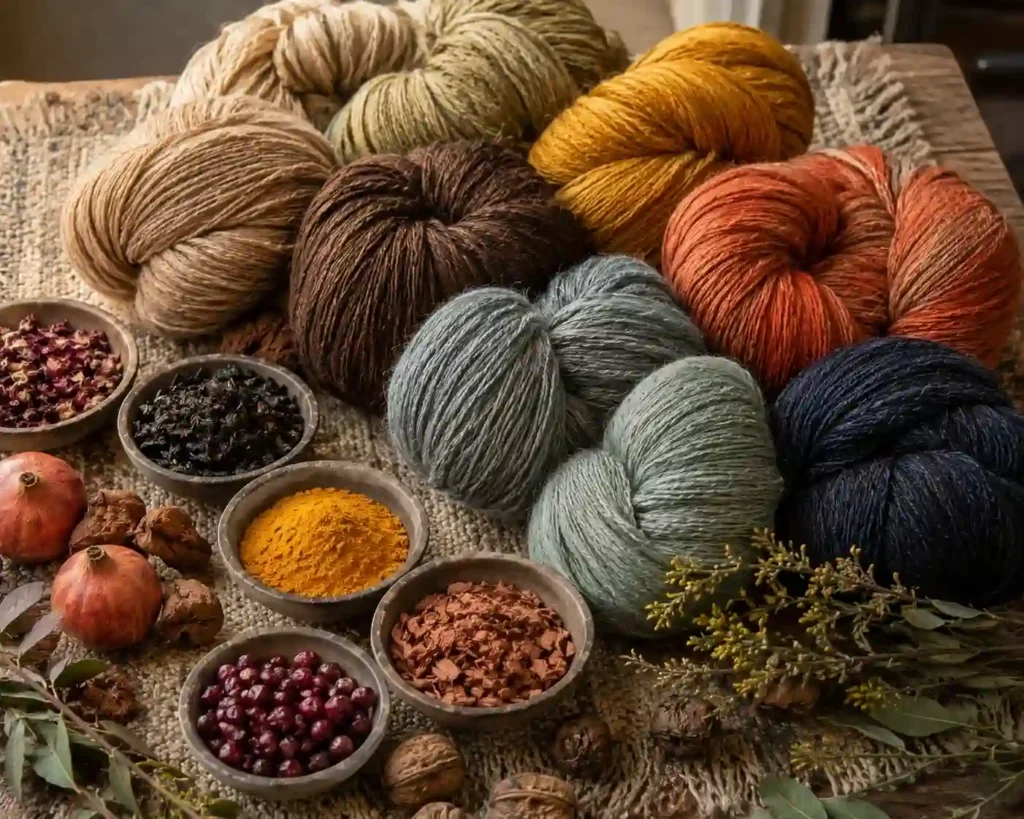
Colour is one of the most immediately noticeable things about any rug and getting it right takes real expertise. The dyeing process plays a major role in defining the rug’s depth, richness and overall visual character.
- Yarn dyed using plant-based and AZO-free (eco-friendly) dyes
- Safe for families and environmentally friendly
- Inspired by traditional Bhadohi rug-making techniques
- Indigo is used for natural blue tones instead of artificial colour
- We use Madder root to create rich red shades
After dyeing, the yarn is dried in open sunlight. This fixes the colour and brings out its natural richness in a way that artificial drying simply cannot match.
At Hasida Rug Collection, designs range from traditional floral and geometric patterns rooted in Indian craft heritage to modern abstract compositions and fully custom pieces created around a client’s specific brief.
- Designs are planned on graph paper or digitally
- Detailed layouts guide weavers through the process
- Ensures precision and consistency in every rug
- Helps artisans follow complex patterns accurately
If you have your own design idea, our team can turn it into a beautiful, handmade custom rug. Give us a call or drop us an email.
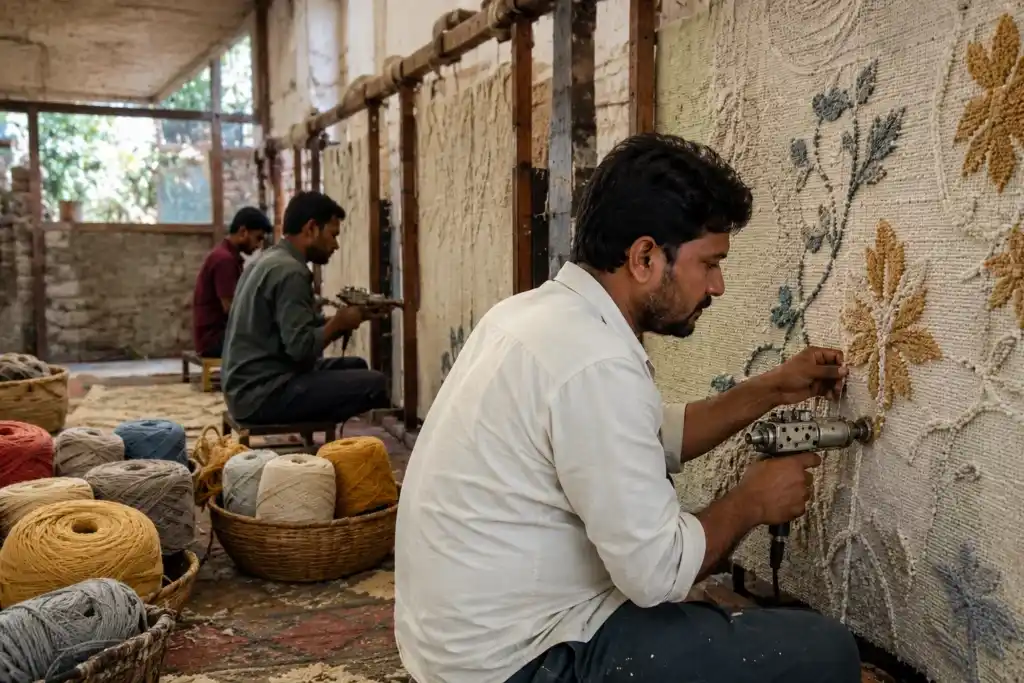
For hand tufted rugs, we use custom built tufting frames rather than traditional vertical looms. The warp threads are stretched tightly across the frame forming the structural foundation.
In hand tufting, yarn is pushed into a canvas backing using a tufting gun which is a handheld tool that allows skilled artisans to work efficiently while still maintaining full creative control over the design.
- Turkish knots add strength and symmetry to rugs
- Flat weave dhurries are pile-free and reversible
- Dhurries work well in light and seasonal spaces
- Each weaving technique suits different home styles and needs
It is faster than hand knotting but it remains entirely a skilled handmade process and it opens up possibilities for bolder, more contemporary patterns that suit modern interiors beautifully
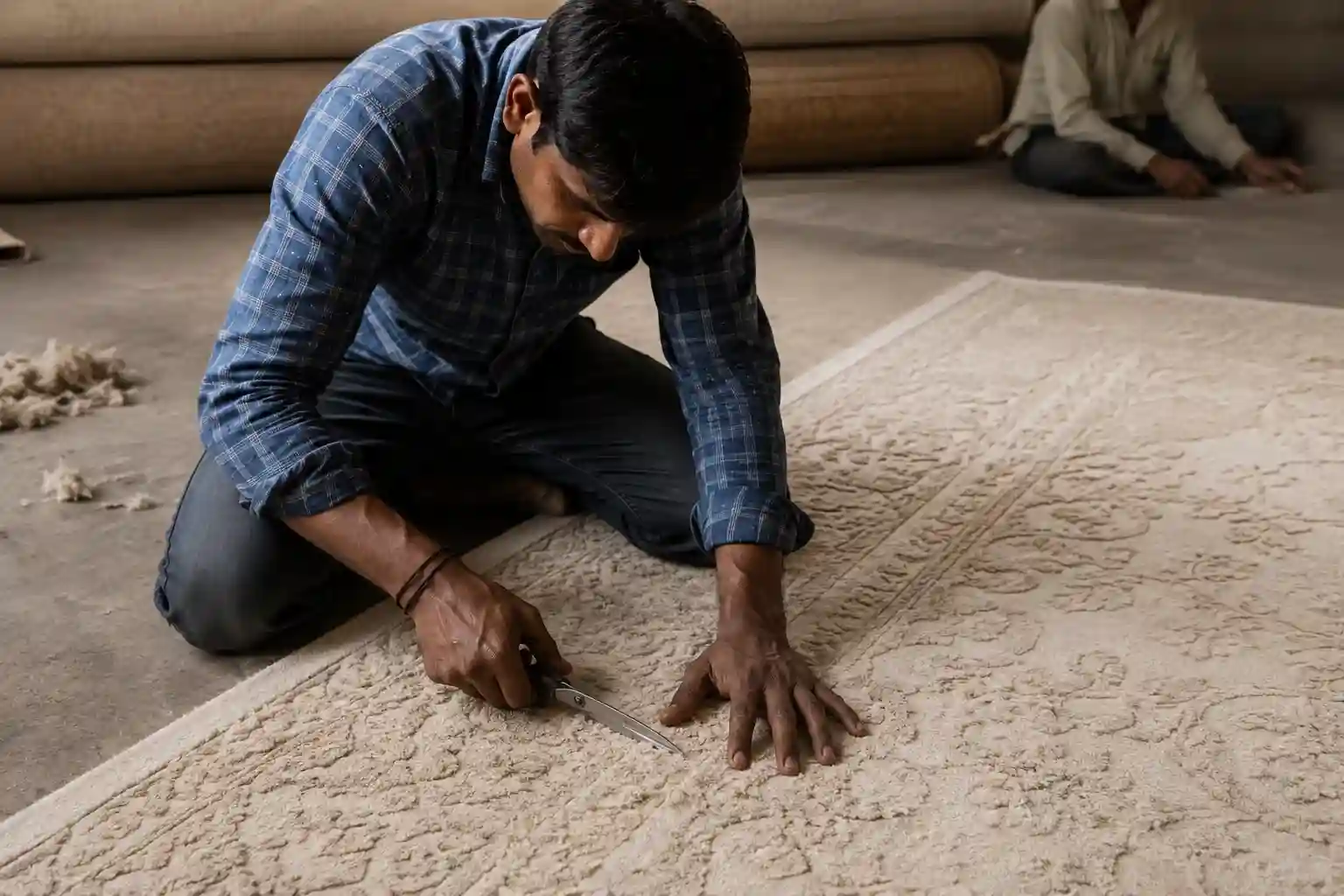
Once the weaving or tufting is complete the rug is trimmed carefully using sharp shears. This stage sharpens the design, smooths uneven areas and gives the rug a clean, polished and professional finish.
- Creates clean and defined design edges
- Maintains consistent pile height throughout the rug
- Smooths uneven areas for a refined finish
- Enhances the rug’s overall appearance and texture
It is the point where the pattern truly comes to life with clear outlines and sharp detailing that were not fully visible during the weaving process.
Step 7: Washing and Sun Drying
After trimming, every rug goes through a thorough but gentle wash using herbal solutions and chemicals, applied carefully with soft brushes.
- Removes loose fibres after tufting and trimming
- Helps colours set properly into the yarn
- Softens the rug’s finished texture
- Improves the overall finish and feel of the rug
The rug is then laid flat and exposed to sunlight to preserve its shape and ensure the colours remain consistent across the entire piece. This is a step that cannot be rushed and we never try to rush it.
During rainy and winter seasons, when sunlight is unavailable, drying chambers are used to dry the rugs properly while maintaining their quality and finish.
Step 8: Final Finishing and Quality Inspection
The last stage is final finishing and quality inspection which covers everything that takes a rug from finished and ready to ship to the customer.
- Edges are bound for added strength and durability
- Hand-knotted or braided fringes added when required
- Rugs are stretched to ensure a perfectly flat finish
- Each rug undergoes a detailed quality inspection
- Approved rugs are prepared for packing and dispatch
Only rugs that pass every stage of that inspection are rolled, packed and prepared for delivery, whether that is across India or international.
What Makes Bhadohi Rugs Different
The Bhadohi rug making tradition has been practised in this region of Uttar Pradesh for centuries and that depth of experience shows in the finished product.
- We use natural wool and plant-based dyes
- Techniques refined and passed down across generations
- Rugs handcrafted by skilled master weavers
- Every stage is completed with skilled human craftsmanship
Every rug that carries the Hasida Rug Collection name reflects that commitment directly, including hand and flat weave collections available for both individual and bulk orders.
Thinking About a Custom or Bulk Order?
If you are looking for something specific whether that is a particular size, colour palette or entirely original design, we make the process straightforward. Share your design idea with our team, approve a sample if needed and we will give you a clear timeline and delivery plan. We ship internationally and respond to all enquiries within 24 to 48 hours.
From Skilled Artisan Hands to Your Floor
When you bring a rug from Hasida Rug Collection, you are bringing home something that was built by hand, step by step, by people who genuinely care about what they make. Every weave carries the weight of a tradition that has been kept alive for generations in one of India’s greatest craft regions.
This level of detailed attention cannot be matched by a mass produced product. A photograph can capture the looks, colours, design detail but it cannot capture the feel, emotion and effort of the artisan. But now after this guide you feel all the moments the rug is on your floor.
Frequently Asked Questions
Q1. How is carpet made in Bhadohi?
Bhadohi carpets are handmade through weaving, tufting or knotting techniques using wool, silk and traditional artisan craftsmanship passed through generations.
Q2. How are handmade rugs made?
Handmade rugs are created by weaving or knotting yarn on looms, followed by trimming, washing, finishing and detailed quality inspection.
Q3. Are Bhadohi rugs exported internationally?
Yes, Bhadohi rugs are widely exported to countries like the USA, UK, Europe and many global wholesale markets.
Q4. Can I order a custom size or design?
Yes, custom rug sizes, colors, patterns and designs can be created based on your specific requirements and preferences.
Q5. Should a rug be darker or lighter than the floor?
Rugs can be lighter or darker than flooring, but contrast usually creates better visual balance and helps define the space clearly.
Q6. What are the most popular rug materials?
Wool, cotton, jute, silk and synthetic fibres are the most popular rug materials because of their durability, texture and versatility.