
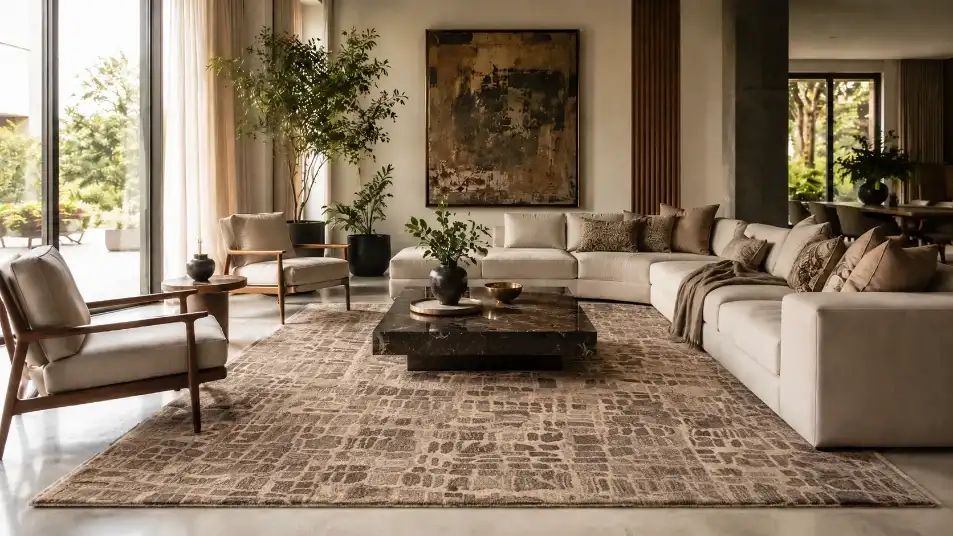
Best Handmade Indian Rugs for Luxury Home Interiors
India’s carpet weaving tradition dates to the 16th century Mughal era, when Persian techniques merged with indigenous Indian artistry to create something entirely distinct. A weaving culture that produced pieces of extraordinary complexity and beauty emerged from that meeting.
Artisans working in family workshops across Rajasthan, Kashmir, Bhadohi, Uttar Pradesh and Agra have refined these techniques over many generations and what they produce today is unlike anything a factory floor can replicate.
When you place one of these rugs in a room you are not simply choosing a floor covering. You are choosing a piece with a real story and that story gets more interesting the longer the rug is in your home.
Regional Styles of Handmade Indian Rugs
India’s rug making tradition is deeply regional and each area has its own techniques, materials and aesthetic signatures. Understanding these differences helps you make a choice that truly suits your space and your personal taste.
Kashmiri Handmade Rugs
Kashmir produces some of the most refined and beautiful handmade Indian rugs in the world because they, made from pure silk or silk-wool blends, feature an extremely high knot density, detailed floral patterns crafted by skilled artisans, takes months or years to complete.
They have a luminous quality that shifts with the light and viewing angle which makes them best suited to formal living rooms and bedrooms.
Jaipur Handmade Indian Area Rugs
Jaipur is one of India’s largest and most prolific carpet-weaving centres. The word Jaipur immediately reflects traditional Indian rug artistry and authentic craft origins. It is more popular because:
- Jaipur rugs feature bold colour palettes
- Often designed with Indian craft traditions
- Available in hand-knotted and high-end traditional styles
- Blend traditional craftsmanship with modern design
They are more accessible in price than Kashmiri silk pieces, but no less characterful and they work particularly well in contemporary and eclectic interior styles.
Agra is one of the most historically significant rugs making cities in India. Drawing heavily from Persian tradition, Agra rugs are known for grand medallions and designs in grass quality. Agra rugs:
- Feature rich jewel-toned colour palettes
- Designed with a dense and luxurious pile
- Creates a bold statement in interior spaces
They are ideal for formal dining rooms and spacious living areas that need warmth, elegance and a strong visual focal point.
Bhadohi and Mirzapur are also known as the rug-making hubs of India, which are located in Uttar Pradesh. Bhadohi is the heart of India’s handmade rug industry and contributes around 80% of India’s handmade rug exports volume.
- They produce both wool and cotton handmade rugs
- Offers styles from traditional to modern designs
- Known for exceptional craftsmanship and durability
- Available across a wide range of price points
They are widely regarded as the commercial backbone of India’s handmade rug export industry.
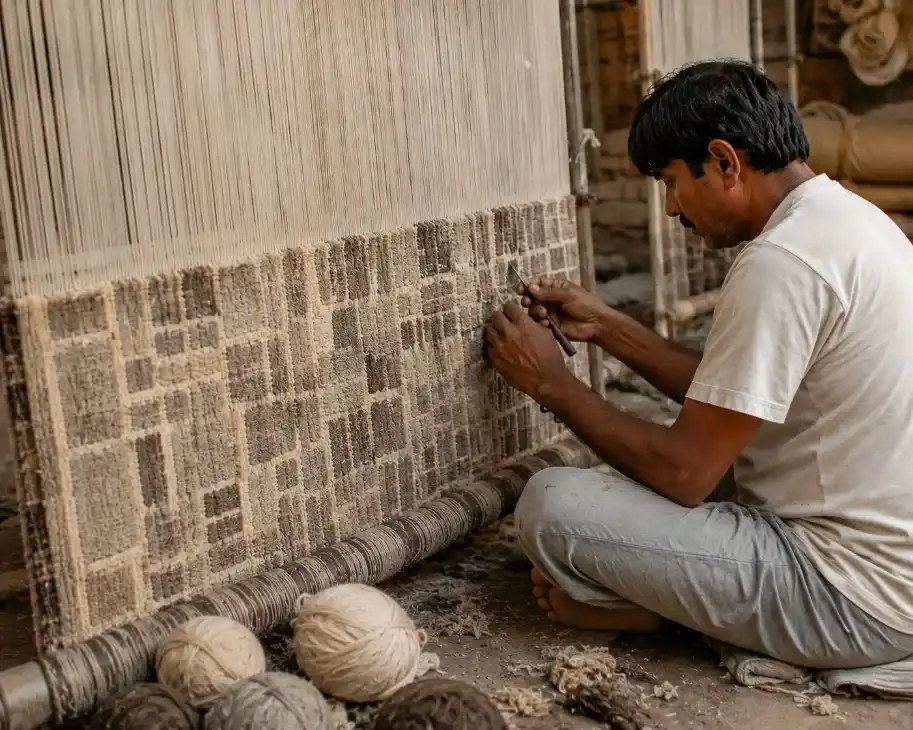
Choosing a premium handmade Indian rug is depend on room size, material, durability and interior style.
Choose the right size before anything else: This is the most common mistake people make when buying rugs. A rug that is too small for the room looks lost and disconnected and on the other hand a rug that is too large overwhelms the space and makes the room feel crowded and heavy.
Golden Rule: In a living room, all key furniture should sit either fully on the rug or at least with front legs on it. In a dining room, the rug should extend at least 60cm beyond the table on all sides so chairs remain on the rug when pulled out for seating.
Choose the material based on the room’s needs: Silk rugs are best for low traffic areas like bedrooms and formal sitting rooms where their natural sheen can be properly appreciated but they demand proper care and maintenance.
Wool rugs are the practical choice for living rooms hallways and dining rooms because they are durable, resilient and straightforward to maintain. Wool silk blends sit in the middle ground and combine wool’s durability with silk’s visual refinement beautifully.
Think carefully about colour: A handmade Indian area rug can anchor a room’s entire colour palette or provide a deliberate contrast against it. If your furniture is neutral in whites, greys or natural linens a richly coloured Kashmiri or Agra rug becomes the room’s focal point naturally.
If the room already carries significant colour, a more restrained palette in the rug allows everything to coexist without competing.
Consider pile height and texture for the specific room: Higher pile rugs feel genuinely luxurious underfoot and work beautifully in bedrooms.
Lower pile or flatweave rugs are more practical in dining rooms and high traffic areas where spills and chair legs are part of everyday life.
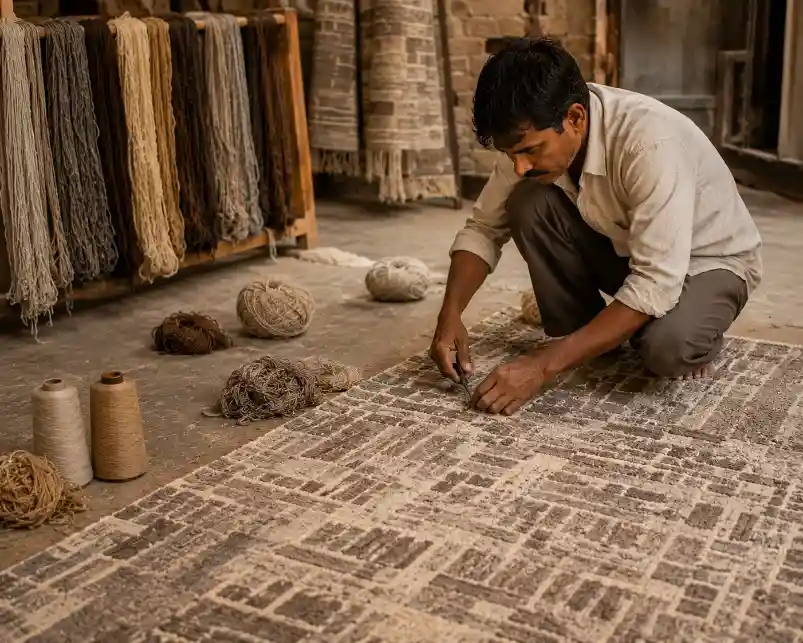
How Handmade Indian Rugs Transform Every Room in Your Home
A handmade rug does something that very few home accessories can genuinely claim to do. It changes how the room feels, how the space reads and how people experience it the moment they walk in.
Living Room
A handmade Indian rug is often the single most powerful design decision you can make in a living room. It is more impactful than paint colour and more transformative than furniture arrangement.
- Kashmiri silk rugs instantly elevate neutral living spaces
- Rugs from Jaipur adds traditional pattern to minimalist interiors
- The right rug can completely transform a room’s atmosphere
The rug defines the zone and gives the room a genuine sense of purpose.
Bedroom
In a bedroom, a premium handmade rug is placed under the bed, extending 60 to 90cm on both sides because:
- Extending the rug around the bed creates a balanced, luxurious look
- Flatweave dhurries add color and pattern to minimal bedrooms
- Adds visual richness that enhances the overall bedroom atmosphere
- Hand-knotted or Hand-loomed wool rugs add warmth and softness to bedrooms
Wool rugs are particularly effective in bedrooms because they are soft warm and genuinely comfortable underfoot.
Dining Room
A large flatweave or low pile handmade Indian area rug under a dining table defines the dining zone beautifully in an open plan space.
- Adds warmth to hard-surfaced spaces
- Enhances the room’s overall aesthetic effortlessly
- Creates a softer and more inviting atmosphere
Choose a rug with a tight weave in this room because it is easier to clean and more resistant to the spills that come with regular dining.
Home Office or Study
The home office is a room that most people furnish for function and forget about feeling. A desk, a chair, a screen and whatever wall space is left tends to be the extent of it. Handmade rugs do something in a home office that genuinely surprises people.
- It helps to reduce echo within the room
- Improves overall room acoustics
- Creates a quieter environment for work
- A well-chosen rug adds calm and focus
A classic Agra or Bhadohi rug in neutral tones adds warmth to a working environment without becoming a distraction from it.
What to Look for When Buying Authentic Handmade Indian Rugs
The market includes everything from genuine artisan pieces to machine-made imitations marketed as handmade. Here is how to buy with real confidence.
- Ask sellers for clear rug origin and craftsmanship details
- Higher knot counts usually indicate finer craftsmanship
- Check the rug backing for visible individual hand knots
- Choose natural dyes for better and more even aging over time
- Good export quality wool feels softer and more resilient than synthetic fibres
Always buy from verified sources and look for sellers who provide authenticity information, ethical sourcing details and genuine customer references.
How to Care for a Premium Handmade Indian Rug
A handmade Indian rug is an addition of beauty and the right care keeps it looking exceptional for decades without much effort once you establish the habits.
- Vacuum frequently used rugs weekly
- Rotate rugs every 6–12 months for even wear
- Keep rugs away from direct sunlight to prevent fading
The Right Handmade Indian Rug Changes a Room Completely
A room with the right handmade Indian rug feels considered warm and complete in a way that is genuinely difficult to achieve through any other single design decision.
These are not impulse purchases, they are considered additions to your home that bring beauty, craftsmanship and lasting quality beyond changing trends.
Hasida Rugs Collection works directly with artisan weavers across India’s established weaving regions and offers verified handmade Indian rugs with full origin transparency for retail buyers, interior designers and trade customers internationally.
Frequently Asked Questions
Q1. Are handmade Indian rugs durable for everyday use?
Yes, handmade Indian wool rugs are highly durable and suitable for living rooms, hallways and other high-traffic areas.
Q2. How can you identify an authentic handmade Indian rug?
Check the rug backing for visible knots, uneven handmade details, natural materials and verified craftsmanship information from the seller.
Q3.Which material is best for handmade Indian rugs?
Wool is the most popular material for handmade Indian rugs because it is durable, soft and suitable for everyday use.
Q4. What products are available on the Hasida Rug Collection website?
The Hasida Rug Collection website offers handmade rugs, carpets, runners and contemporary designs crafted by skilled Indian artisans.
Q5. Why do some rugs have fringes and tassels on the edges?
Fringes and tassels are often part of the rug’s foundation and also add a decorative traditional finishing detail to the design.